The Real Juggle: Soccer 2026
- 3.1
- Rating
- 50.00M
- Installs
- Free
- Price

 Analysis by App-foxy
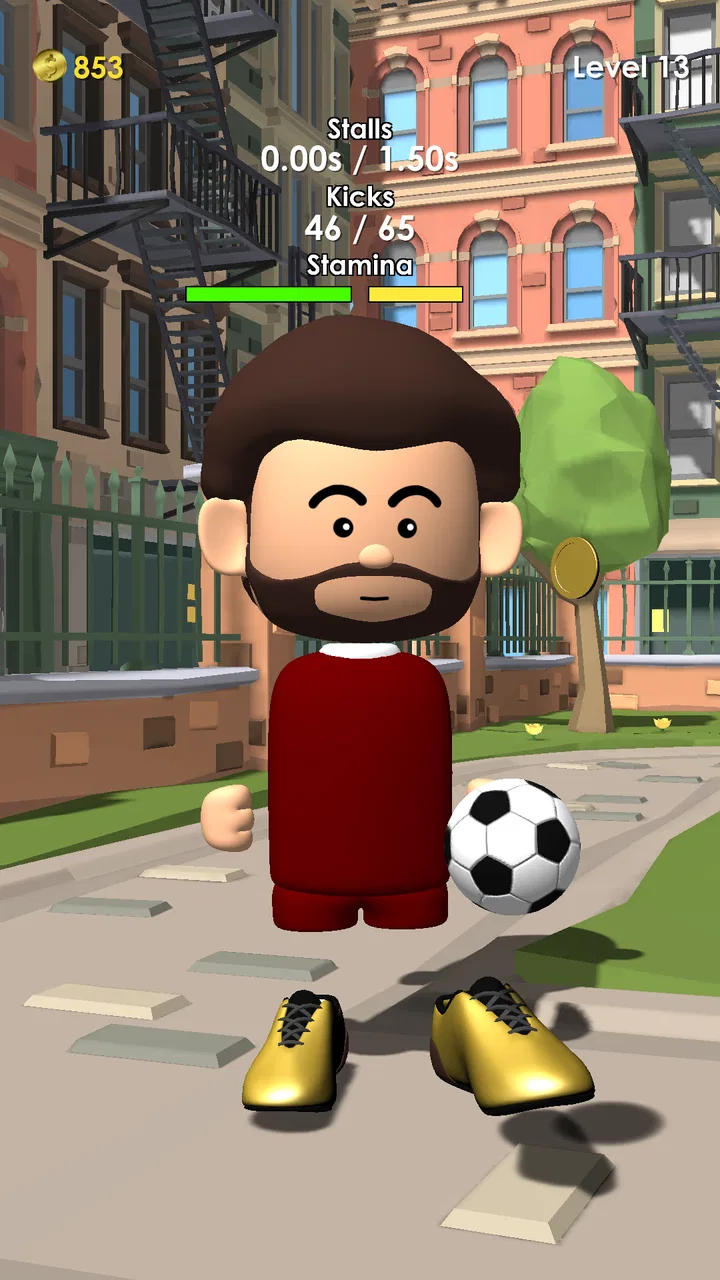
I spent time with The Real Juggle: Soccer 2026 as a quick sports game rather than treating it like a full football simulation. That distinction matters. Its appeal comes from trying to keep a ball moving with freestyle touches, building a little control through repetition, and chasing the satisfaction of getting one more clean sequence than the last time. It is easy to understand within minutes, but deciding whether it deserves a permanent place on your phone depends on how much you enjoy short skill-based sessions.
Lion Studios presents it as a free game in the sports category, and the store summary calls it “Pro Freestyle Football.” I found that description more useful than comparing it with traditional eleven-a-side football games. This is not the kind of title I would install for team management, realistic matches, or deep tactics. I would reach for it when I have a spare moment and want something physical-feeling, focused, and immediately playable.
What the first week feels like
The opening appeal is straightforward: the ball is the center of attention, and every successful touch feels like a small personal achievement. Instead of learning a large control scheme, I could concentrate on timing, direction, and keeping my sequence alive. That makes the first sessions welcoming even if I am not particularly good at football games. The game communicates its basic idea quickly, so there is little need to study menus before getting started.
You May Also Like

 AccuWeather: Weather Radar
AccuWeather Review: A Quick, Clear Forecast for Everyday Decisions
For everyday plans, the best forecast is the one you can understand quickly. AccuWeather makes rain timing, radar, and local conditions easy to act on, with a few trade-offs.

 Hill Climb Racing
Why Hill Climb Racing Still Turns Crashes Into One More Run
A tiny car, a bumpy hill and one more upgrade: Hill Climb Racing keeps resurfacing because its simple chaos makes every near-miss feel personal.

 AliExpress - Shopping App
AliExpress Makes Global Shopping Feel Personal, but Shoppers Bear the Risk
AliExpress turns a global marketplace into a pocket-sized discovery engine. Its reach is useful, its shopping loop compelling, and its trade-offs easy to miss.

 Lords Mobile: Kingdom Wars
Lords Mobile Is a Kingdom-Building Routine, Not a Quick Match
A case-by-case verdict on the building, battles, device demands, and social commitments that make Lords Mobile rewarding for some players and exhausting for others.

 PDF Scanner app - TapScanner
TapScanner Makes Paperwork Easier to Capture, Check, and Share
TapScanner makes scanning with a phone feel less like a rescue operation and more like a dependable step in getting work done. Its capture tools are useful, though not flawless.

 Block Blast!
 Shows How Much a Puzzle Game Can Leave Out
A quiet grid game shows why puzzle players increasingly value instant clarity, repeatable skill and low-pressure play—and where the genre still needs to catch up.
More From Our News Desk
View All News


That simplicity is one of its strongest qualities. A short attempt does not require the commitment of a complete match, and I could stop after a few minutes without feeling that I had abandoned a complicated campaign. It works well during a commute, while waiting for food, or between other tasks. The best early sessions were the ones where I played with a small goal in mind: perform a cleaner run, recover after a mistake, or understand why a touch sent the ball away from me.
The first-week learning curve is gentle at the beginning but not empty. The controls may look simple, yet consistent juggling asks for attention. I quickly noticed that rushing inputs made the ball harder to control. Slowing down and watching the rhythm produced better results than trying to move as quickly as possible. That is an important tip for new players: treat each touch as information rather than immediately chasing a long sequence.
I also recommend using the first few sessions to find a comfortable grip. Because the action depends on small movements, the way I held the phone affected how confidently I reacted. Playing while distracted or using one hand in an awkward position made mistakes feel more random than they really were. A stable hold and a few uninterrupted minutes gave me a clearer sense of whether I was improving.
The game’s free entry point helps with experimentation. There is no purchase required to discover whether this particular style of football play suits you. The age rating is Everyone, which makes the presentation approachable for a broad audience. Still, “easy to start” should not be confused with “effortless to master.” The first week is enjoyable because improvement arrives quickly, but that early progress can also create expectations the longer-term experience may not always satisfy.
Why the novelty works
The novelty comes from turning football into a compact coordination challenge. Traditional mobile football games usually ask me to manage a match, guide a team, or make strategic decisions. Here, the satisfaction is much narrower and more tactile: keep the ball under control and avoid breaking the flow. That focus gives it a different mood from a standard sports title.
I found the game especially effective when I wanted a reset after a demanding task. It does not require me to remember a storyline or maintain a complicated squad. I can play, fail, and try again without much preparation. For a friend who likes arcade challenges but does not want a long tutorial, I would describe this as a low-commitment way to get a football-flavored skill test.
However, the same narrow focus can expose its limits quickly. If you install it expecting the variety of a conventional soccer game, the first week may be exciting but also misleading. The game’s central action is the product, not merely an introduction to a wider football package. Once the basic interaction becomes familiar, the question changes from “Can I learn this?” to “Do I enjoy repeating this?”
What remains after the first month
Month-to-month value depends heavily on whether personal improvement is enough motivation. I can return to it after a break and immediately understand what I am supposed to do, which is a real strength. There is no complicated setup barrier. The game is also installed widely, with over 50 million installs, so it clearly has broad reach. That popularity does not guarantee a perfect fit, but it does place the title among the more visible casual sports options.
For me, the most sustainable use is as a short practice game. I might play for a few minutes, notice one recurring mistake, and stop before the session turns into frustration. Returning later with that small target makes the experience feel more purposeful than endlessly tapping for a high result. This is one of the less obvious ways to preserve its value: use it as a concentration exercise with a football theme, not as a game that must provide a new event every day.
The trade-off is that the long-term loop may feel self-directed. Players who enjoy setting their own benchmarks can continue finding reasons to return, while players who need frequent surprises, story progression, or a constantly changing competitive structure may lose interest. I would not recommend relying on it as your only sports game if variety is your main requirement.
The average rating sits at 3.1 from around 87 thousand ratings, with roughly 2.1 thousand written reviews. I read that as a useful warning against assuming that broad installation numbers equal universal satisfaction. A game can be easy to download and fun for short bursts while still dividing players over repetition, controls, or monetization. In my experience, it is better judged by the type of habit it supports than by its reach alone.
Who gets recurring value
This is a good match for someone who likes arcade sports, timing challenges, and gradual improvement without needing a full match structure. It can also suit a football fan who wants something lighter than a squad-building game. If you enjoy replaying a familiar action to make your execution cleaner, the core can remain satisfying beyond the first few days.
I would be more cautious recommending it to someone who wants realistic football rules, online team competition, career development, or a large collection of strategic choices. Those players are likely to find a traditional football simulation or management game more rewarding over several months. The Real Juggle does not need to imitate those alternatives, but its focused design means it cannot replace them.
A realistic everyday scenario is a short evening break. After finishing work, I can play a handful of attempts while waiting for dinner, then put the phone down without needing to complete a match. That is where the game earns its space: it fills small gaps cleanly. It becomes less convincing when I expect a substantial session and keep playing after the central challenge has stopped feeling fresh.
Maintenance, friction, and the cost of returning
The maintenance burden is relatively light in one sense: the game is free, and the current version is 1.13.3. It runs on devices using Android 8.0 or later, so compatibility is not aimed at very old Android hardware. For a new player, those details make the installation decision simple, but they do not answer the more important question of whether the game remains enjoyable after the controls become familiar.
There is also a financial maintenance burden to consider. Optional in-app purchases range from $0.99 to $24.99 per item. I would approach those purchases carefully. The free version is the right place to test the core loop first, because no paid item can solve the basic question of whether juggling itself remains enjoyable for you. If the game becomes a regular habit, set a personal spending limit before browsing purchase options rather than making a decision in the middle of a frustrating run.
Another form of maintenance is mental rather than financial. Short skill games can become tiring when every session asks for the same kind of concentration. My practical solution is to keep sessions deliberately brief and return only when I actually want that challenge. Playing automatically out of habit made the experience feel like a chore, while choosing a specific reason to play kept it sharper.
There is a useful difference between practice and grinding here. Practice means I am paying attention to timing and learning from a mistake. Grinding means I am repeating attempts while hoping the next one feels different. The former can support long-term value; the latter is where fatigue usually begins. If you notice that you are tapping without thinking, that is probably a good moment to close the game.
Where fatigue starts
The biggest source of fatigue is repetition in the central activity. A focused mechanic can be satisfying because it is clear, but clarity also means there are fewer places to hide when interest drops. A new player may enjoy discovering control, then realize that future sessions depend mostly on continuing to refine the same interaction.
Failure can add to that fatigue when the result feels caused by a tiny timing error that is difficult to interpret. I found it more productive to change one thing at a time: slow the input, adjust my grip, or give the ball more attention before attempting a longer sequence. Randomly changing everything made progress harder to recognize.
Another possible friction point is expectation. The name and football presentation can make a player imagine a broader soccer experience than the game actually provides. If you want matches, passing patterns, defensive decisions, or team progression, this will feel narrow. If you want a compact freestyle challenge, the same narrowness becomes its identity.
I also would not choose it for a group gathering unless everyone already enjoys this kind of solo score-chasing. It does not replace a multiplayer football game when the goal is shared competition and conversation. Its best social use is more informal: showing a friend a difficult sequence or comparing personal progress, rather than expecting a complete party experience.
How it compares with usual sports alternatives
Compared with a conventional mobile soccer game, this title is faster to understand and easier to play in fragments. I do not need to manage a roster or commit to a match before seeing whether I am in the mood. That makes it the better choice for short breaks and casual practice.
The conventional alternative wins on variety and context. A match-based game can give each session a different tactical problem, while a management game can create long-term decisions away from the pitch. Those games are more suitable when I want a sense of season, team identity, or strategic planning. Choosing between them is not about which one is universally better; it is about whether I want a precise action loop or a broader football world.
Compared with other quick arcade games, the football theme gives this one a recognizable physical goal. I am not simply matching items or waiting for a timer. I am trying to maintain control, and that can make improvement feel personal. The downside is that the theme does not automatically create variety. Once the novelty of juggling fades, the underlying loop has to carry the experience on its own.
This is why I would keep it installed alongside, not instead of, a larger sports game. It is useful as a lightweight option for spare moments, while a full football title can handle longer sessions. If phone storage or attention is limited, choose it only if the juggling mechanic itself sounds appealing. The store short description, “The Real Juggle,” points toward that focused identity, and it is best not to expect more than that focus promises.
My long-term verdict
After the novelty fades, The Real Juggle: Soccer 2026 earns lasting space only for players who enjoy repetition with a clear skill target. Its strongest quality is accessibility: I can start quickly, understand the purpose, and use it in small pockets of time. Its weakest quality is the same narrowness that makes it approachable. Without self-imposed goals, the return loop can become thin.
I would recommend trying the free version before considering any purchase. Give it several separate sessions rather than judging it after one exciting run. Notice whether you are interested in improving your control or merely enjoying the first impression. That test is more useful than the install count, the rating, or the presence of optional items.
For a casual sports player, a football fan seeking a compact distraction, or anyone who likes coordination challenges, it can become a pleasant small habit. For someone looking for a complete soccer simulation, ongoing narrative, or deep monthly progression, I would choose a different game. The 3.1 average suggests a mixed reception, and my own conclusion is similarly balanced: it is worth keeping when the act of juggling is the reason you return, but not when you need the game to continually reinvent football for you.
That makes Lion Studios’ game easy to recommend selectively. Install it for the immediate, hands-on challenge, keep sessions short, and treat improvement as the main reward. If that personal practice remains satisfying after several weeks, the game has found its place. If every return feels like repeating the same first-day trick, uninstalling it is not a failure; it simply means your long-term sports interests belong in a broader kind of game.
FAQs for The Real Juggle: Soccer 2026
01What is The Real Juggle: Soccer 2026 about?
The Real Juggle: Soccer 2026 is a unique mobile game that challenges players to master the art of juggling a soccer ball. Unlike typical soccer games, it focuses on skillful ball control and offers various levels and challenges to test your juggling abilities. It's designed for both casual players and soccer enthusiasts.
02Is The Real Juggle: Soccer 2026 free to play?
Yes, The Real Juggle: Soccer 2026 is free to download and play. However, it does offer in-app purchases that can enhance the gaming experience. These purchases may include additional levels, customization options for your soccer player, or power-ups that can help you progress more easily.
03What are the system requirements for the game?
The Real Juggle: Soccer 2026 requires iOS 10.0 or later for Apple devices, and Android 5.0 or higher for Android devices. It's optimized for smartphones and tablets, ensuring smooth gameplay and graphics. Ensure you have adequate storage and a stable internet connection for the best experience.
04Can I play The Real Juggle: Soccer 2026 offline?
Yes, The Real Juggle: Soccer 2026 can be played offline. However, some features, such as leaderboards and daily challenges, require an internet connection to access. Playing offline will limit these functionalities, but you can still enjoy the core juggling gameplay without connectivity.
05Does The Real Juggle: Soccer 2026 have multiplayer features?
Currently, The Real Juggle: Soccer 2026 is primarily a single-player experience focusing on personal skill development. However, it does offer competitive leaderboards where you can compare your juggling scores with players worldwide, adding a social and competitive element to your gameplay.
Pros
- Intuitive controls make gameplay accessible.
- Engaging challenges keep players motivated.
- Realistic physics enhance juggling experience.
- Visually appealing graphics and animations.
- Offline mode available for on-the-go play.
Cons
- Repetitive gameplay may feel monotonous.
- In-app purchases can become expensive.
- Limited customization for characters.
- Occasional ads disrupt gaming experience.
- Requires updates for new features.

The Real Juggle: Soccer 2026
Gallery